As a host, you know the story: a delayed flight, a rental car that takes longer than expected, and suddenly, you receive a message at 2:30 AM: “We’re already at the doorstep”. From bed, you get ready to do the check-in at dawn, unable to rest properly.
The dilemma is real. Do you get up and go greet the guests just to collect their ID data? Do you leave them the keys in a box and risk them forgetting to send you the photo of the document the next day, violating the legal 24-hour deadline?
In this article, we teach you how to manage night arrivals professionally, legally, and, above all, without costing you your rest.
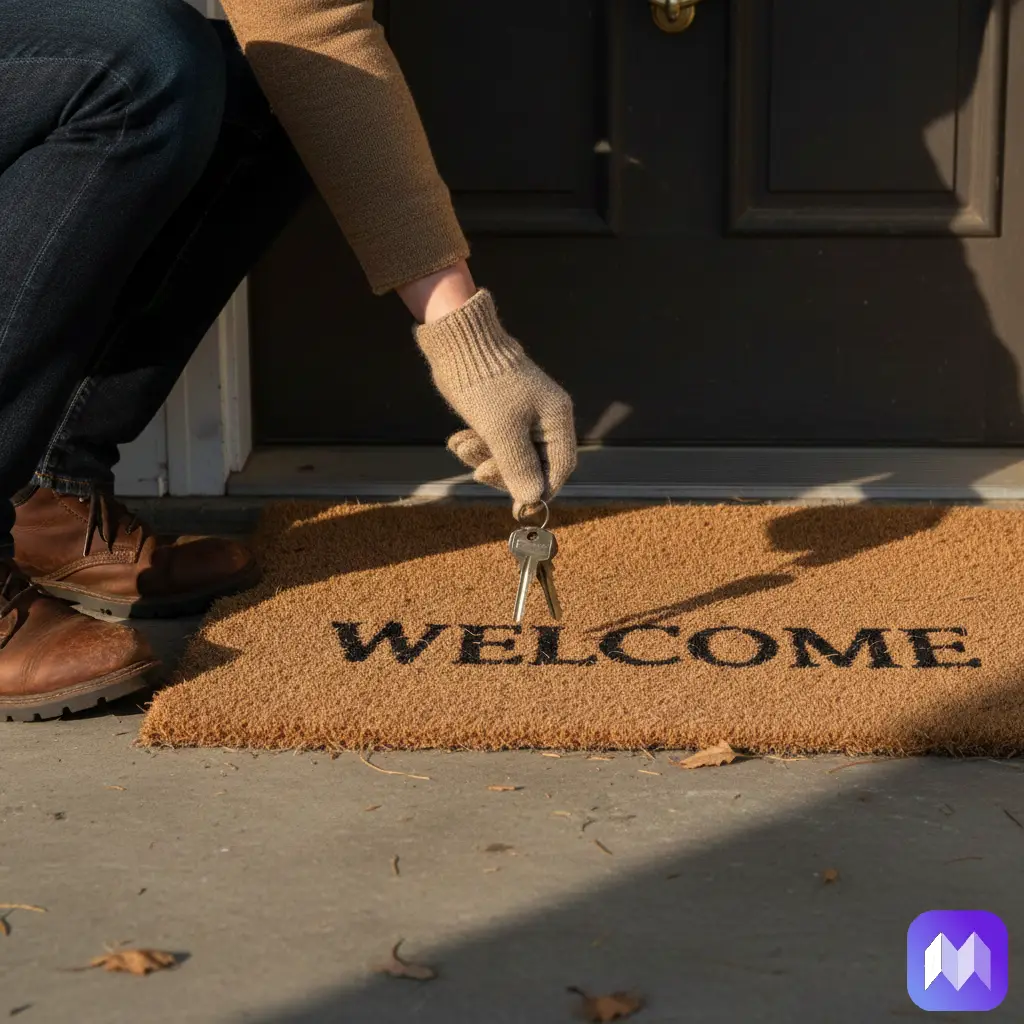
The legal risk of “keys under the doormat”
The self check-in system (autonomous entry) has revolutionized the sector, but legally it has a catch. The Royal Decree 933/2021 requires that identification be effective at the time of entry.
If you allow a guest to enter your property at 3:00 AM and do not register their information on the authorities’ platform before 3:00 AM the next day, you are committing an infringement. If any security incident occurs that night and the guest is not registered, the legal responsible party is you.
3 Strategies for a Flawless Night Check-in
1. Prior Online Check-in (The safest option)
Do not wait for the guest to arrive at the door. Send an automatic check-in link 24 or 48 hours before arrival.
- Advantage: When the guest arrives at your house in the early morning, you already have their check-in part signed and validated in your control panel.
- Key point: The delivery of the electronic lock code is conditioned on the completion of the registration. “No registration, no code.”
2. Synchronized Smart Locks
If you use devices like Nuki, Yale, or Salto, you can automate the process completely.
- Ideal flow: The guest fills in their details at registroparteviajeros.com → The system verifies their identity → The temporary opening code is automatically sent to them for their stay.
3. The Welcome QR in the Accommodation
If you prefer not to be so strict before arrival, place a visible sign with a QR code right at the entrance or on the lounge table.
- The guest arrives tired, scans the code with their mobile, takes a photo of their passport, and the system does the rest. You only receive a notification on your mobile confirming that the registration has been sent to the Police or Civil Guard.
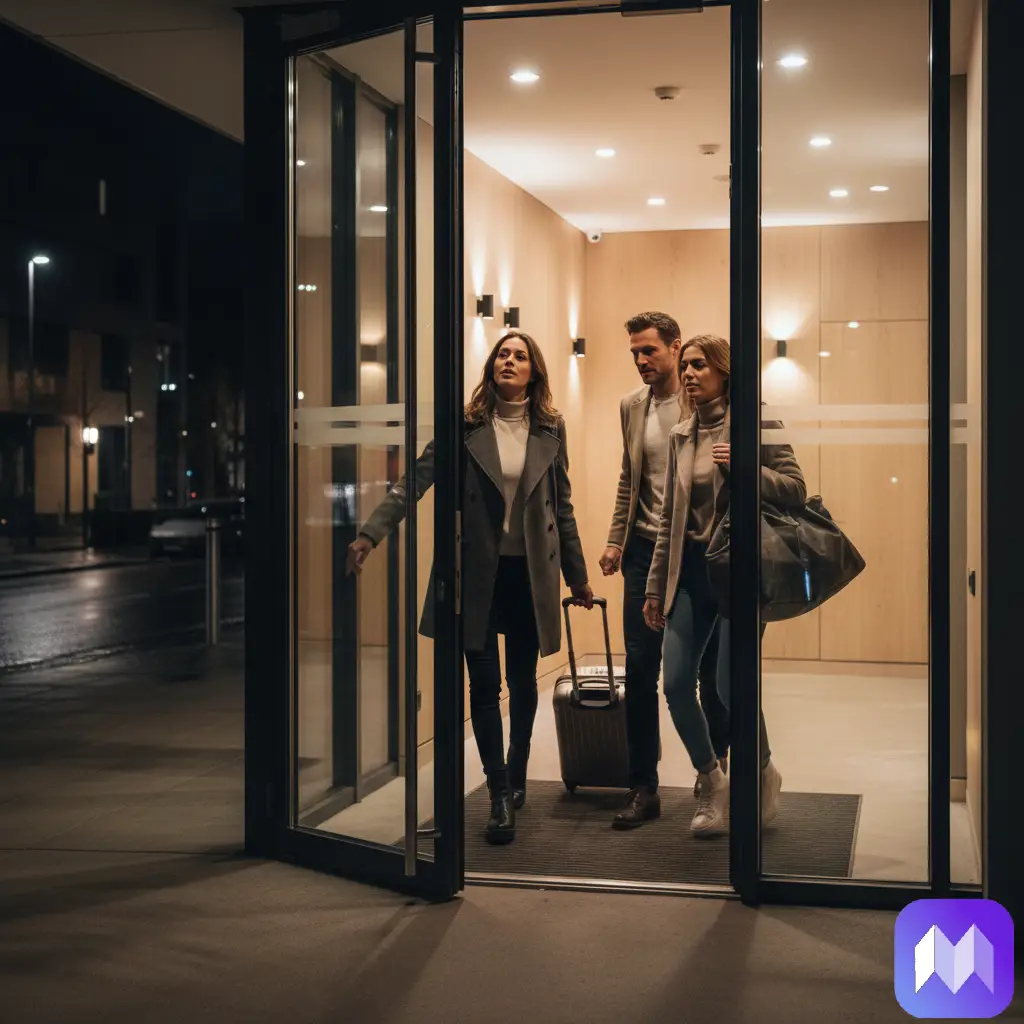
What should your “Early Morning Protocol” include?
For this system to work smoothly, make sure to communicate these three points in your automatic messages on Airbnb, Booking, or your own website:
- Notice of Obligation: “For national security and compliance with RD 933/2021, all guests must register before accessing the accommodation”.
- Digital process instructions: Explain that it is a 30-second process that they can do from their mobile.
- Basic support: Indicates what to do if the ID scan fails (for example, uploading the photo manually).
Conclusion: Your rest is productivity
Managing a Tourist Use Housing (VUT) should not mean being available 24 hours for bureaucratic tasks. Current technology allows regulatory compliance to be invisible and automatic.
At registroparteviajeros.com we have designed a tool that works while you sleep. The system receives the data of your nightly guests, generates the entry report, and communicates it to the authorities instantly.
Do you want to start sleeping peacefully knowing that your early morning check-ins are 100% legal?
Would you like us to help you set up your automatic welcome message with the registration link?